Road signs in Mexico
The road signs used in Mexico are regulated by Secretaría de Comunicaciones y Transportes's Directorate-General for Roads (Dirección General de Carreteras), and uniformized under a NOM standard[1] and the Manual de Dispositivos para el Control del Tránsito en Calles y Carreteras, which serves as a similar role to the MUTCD developed by the Federal Highway Administration. The signs share many similarities with those used in the United States and Canada. Like Canada but unlike the United States, Mexico had a heavier reliance on symbols than text legends.[2] Mexico is a signatory to the Vienna Convention on Road Signs and Signals.
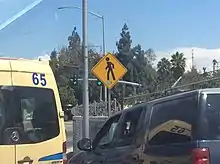
The state of Jalisco applies its own sign standard to state highways that is based on the NOM standard. Among other things, mandatory signs are circular, as in the Vienna Convention but unlike in the NOM standard.[3]
Regulatory signs
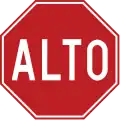 Stop
Stop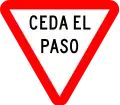 Yield
Yield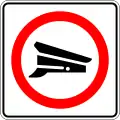 Inspection
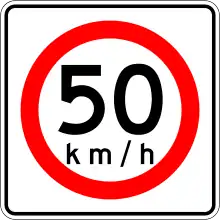 Speed limit
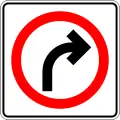 Right turn only
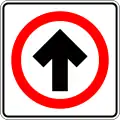 Mandatory direction of traffic (Ahead only)
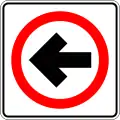 Mandatory direction of traffic (Turn left only)
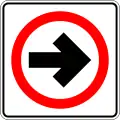 Mandatory direction of traffic (Turn right only)
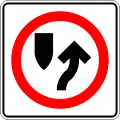 Keep right
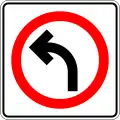 Left turn only
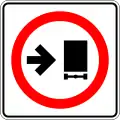 Trucks keep right
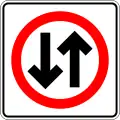 Two-way traffic
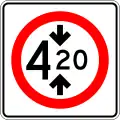 Height limit
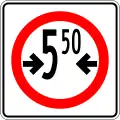 Width limit
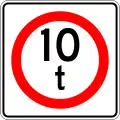 Weight limit
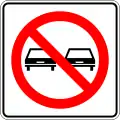 Overtaking prohibited
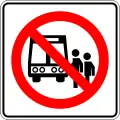 Passenger vehicles prohibited from stopping
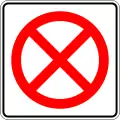 No stopping
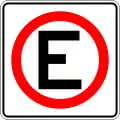 Parking
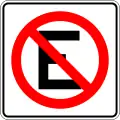 No parking
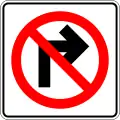 Right turn prohibited
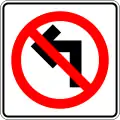 Left turn prohibited
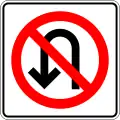 U-turn prohibited
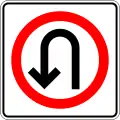 U-turn permitted
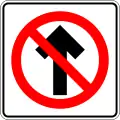 No entry
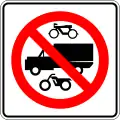 Pedal cycles, heavy vehicles and motorcycles prohibited
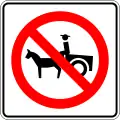 Animal-drawn vehicles prohibited
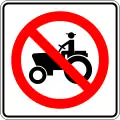 Agricultural vehicles prohibited
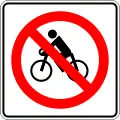 Pedal cycles prohibited
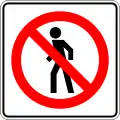 Pedestrians prohibited
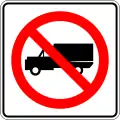 Heavy vehicles prohibited
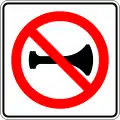 Use of audible signals prohibited
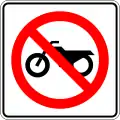 Motorcycles prohibited
 Motor vehicles prohibited
 One way (left)
 One way (right)
Warning signs
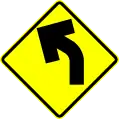 Curve (left)
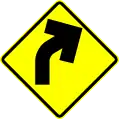 Curve (right)
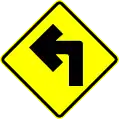 Sharp curve (left)
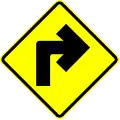 Sharp curve (right)
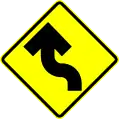 Reverse curve (left)
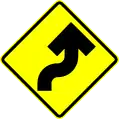 Reverse curve (right)
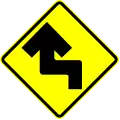 Sharp reverse curve (left)
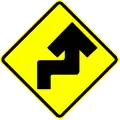 Sharp reverse curve (right)
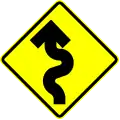 Winding road (left)
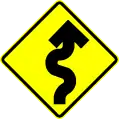 Winding road (right)
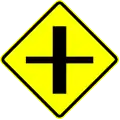 Crossroads
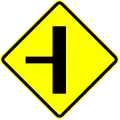 T-junction (left)
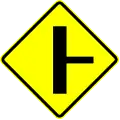 T-junction (right)
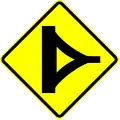 Delta junction
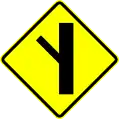 Branch junction (left)
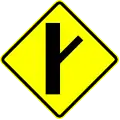 Branch junction (right)
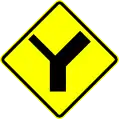 Y-junction (left)
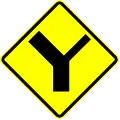 Y-junction (right)
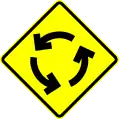 Roundabout
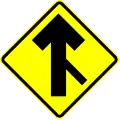 Merging traffic
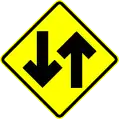 Two-way traffic
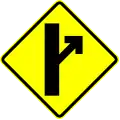 Exit ahead
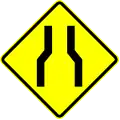 Symmetrical narrowing
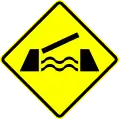 Drawbridge
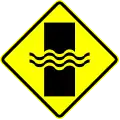 Ford
Ford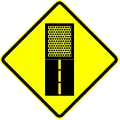 Unpaved road ahead
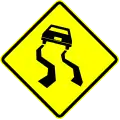 Slippery road
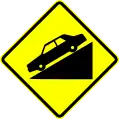 Steep descent
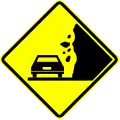 Falling rocks
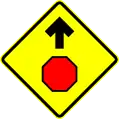 Stop ahead
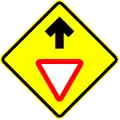 Yield ahead
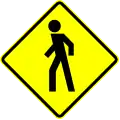 Pedestrians
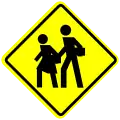 School
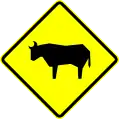 Livestock
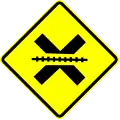 Railroad crossing
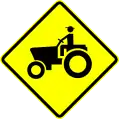 Tractors
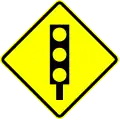 Traffic lights
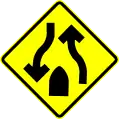 Divided road ends
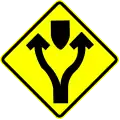 Fork
Fork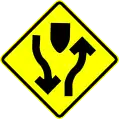 Divided road begins
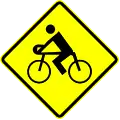 Cyclists
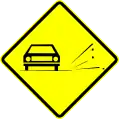 Loose chippings
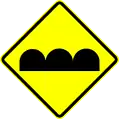 Uneven surface
Tourism and services
 Airport
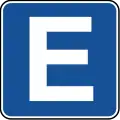 Parking
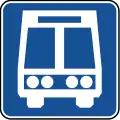 Bus stop
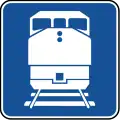 Rail station
 Hospital
Guide signs
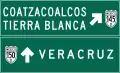 Advance directional sign
Other
 Railroad crossing
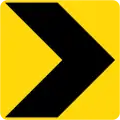 Dangerous curve to the right, chevron bends right
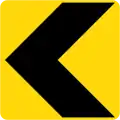 dangerous curve to the left, chevron bends left
References
- "NORMA Oficial Mexicana NOM-034-SCT2-2011, Señalamiento horizontal y vertical de carreteras y vialidades urbanas" [Official Mexican STANDARD NOM-034-SCT2-2011, Horizontal and vertical marking of highways and urban roads] (PDF) (in Spanish). 16 November 2011. Retrieved 2022-12-10.
- "Road and Traffic Signs in Mexico - What You Need to Know". www.rhinocarhire.com. Retrieved 2022-10-28.
- Manual de señalización de carreteras estatales [State highway sign manual] (PDF) (in Spanish). Guadalajara: Government of the State of Jalisco. 2020. Retrieved April 9, 2023.
External links
- "Secretaría de Comunicaciones y Transportes: Señalamiento" [Secretariat of Communications and Transportation: Signaling]. www.sct.gob.mx (in Spanish). Retrieved 2022-12-10.