Portal:Romania

The Romania Portal
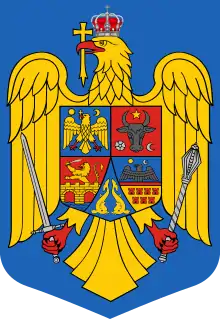
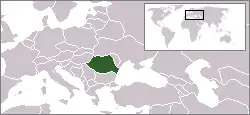
Romania (/roʊˈmeɪniə/ ( Settlement in what is now Romania began in the Lower Paleolithic followed by written records attesting the kingdom of Dacia, its conquest, and subsequent Romanization by the Roman Empire during late antiquity. The modern Romanian state was formed in 1859 through a personal union of the Danubian Principalities of Moldavia and Wallachia. The new state, officially named Romania since 1866, gained independence from the Ottoman Empire in 1877. During World War I, after declaring its neutrality in 1914, Romania fought together with the Allied Powers from 1916. In the aftermath of the war, Bukovina, Bessarabia, Transylvania, and parts of Banat, Crișana, and Maramureș became part of the Kingdom of Romania. In June–August 1940, as a consequence of the Molotov–Ribbentrop Pact and Second Vienna Award, Romania was compelled to cede Bessarabia and Northern Bukovina to the Soviet Union and Northern Transylvania to Hungary. In November 1940, Romania signed the Tripartite Pact and, consequently, in June 1941 entered World War II on the Axis side, fighting against the Soviet Union until August 1944, when it joined the Allies and recovered Northern Transylvania. Following the war and occupation by the Red Army, Romania became a socialist republic and a member of the Warsaw Pact. After the 1989 Revolution, Romania began a transition towards democracy and a market economy. Romania is a developed country and an emerging middle power in international affairs. It has a high-income economy, being the world's 45th largest by nominal GDP, and the 36th largest by PPP. Romania experienced rapid economic growth in the early 2000s; its economy is now based predominantly on services. It is a producer and net exporter of machines and electric energy through companies like Automobile Dacia and OMV Petrom. The majority of Romania's population are ethnic Romanians and religiously identify themselves as Eastern Orthodox Christians, speaking Romanian, a Romance language (more specifically Eastern Romance/Daco-Romance). The Romanian Orthodox Church is the largest religious denomination in the country. Romania is a member of the United Nations, the European Union, NATO, the Council of Europe, BSEC and WTO. (Full article...)
| ||||||||||||||||||||||||||||||||||||||||||||||||||||||||||||||||||||||||||||||||||||||||||||||||||||||||||||||||||||||||||||||||||

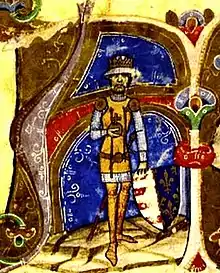 Charles depicted in the Illuminated Chronicle |
Charles I, also known as Charles Robert (Hungarian: Károly Róbert; Croatian: Karlo Robert; Slovak: Karol Róbert; 1288 – 16 July 1342) was King of Hungary and Croatia from 1308 to his death. He was a member of the Capetian House of Anjou and the only son of Charles Martel, Prince of Salerno. His father was the eldest son of Charles II of Naples and Mary of Hungary. Mary laid claim to Hungary after her brother, Ladislaus IV of Hungary, died in 1290, but the Hungarian prelates and lords elected her cousin, Andrew III, king. Instead of abandoning her claim to Hungary, she transferred it to her son, Charles Martel, and after his death in 1295, to her grandson, Charles. On the other hand, her husband, Charles II of Naples, made their third son, Robert, heir to the Kingdom of Naples, thus disinheriting Charles.
Charles came to the Kingdom of Hungary upon the invitation of an influential Croatian lord, Paul Šubić, in August 1300. Andrew III died on 14 January 1301, and within four months Charles was crowned king, but with a provisional crown instead of the Holy Crown of Hungary. Most Hungarian noblemen refused to yield to him and elected Wenceslaus of Bohemia king. Charles withdrew to the southern regions of the kingdom. Pope Boniface VIII acknowledged Charles as the lawful king in 1303, but Charles was unable to strengthen his position against his opponent. Wenceslaus abdicated in favor of Otto of Bavaria in 1305. Because it had no central government, the Kingdom of Hungary had disintegrated into a dozen provinces, each headed by a powerful nobleman, or oligarch. One of those oligarchs, Ladislaus III Kán, captured and imprisoned Otto of Bavaria in 1307. Charles was elected king in Pest on 27 November 1308, but his rule remained nominal in most parts of his kingdom even after he was crowned with the Holy Crown on 27 August 1310. (Full article...)

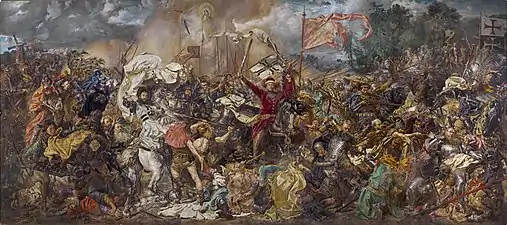 Battle of Grunwald by Jan Matejko (1878) |
The Battle of Grunwald, Battle of Žalgiris, or First Battle of Tannenberg, was fought on 15 July 1410 during the Polish–Lithuanian–Teutonic War. The alliance of the Crown of the Kingdom of Poland and the Grand Duchy of Lithuania, led respectively by King Władysław II Jagiełło (Jogaila), and Grand Duke Vytautas, decisively defeated the German Teutonic Order, led by Grand Master Ulrich von Jungingen. Most of the Teutonic Order's leadership were killed or taken prisoner.
Although defeated, the Teutonic Order withstood the subsequent siege of the Malbork Castle and suffered minimal territorial losses at the Peace of Thorn (1411), with other territorial disputes continuing until the Treaty of Melno in 1422. The order, however, never recovered their former power, and the financial burden of war reparations caused internal conflicts and an economic downturn in the lands controlled by them. The battle shifted the balance of power in Central and Eastern Europe and marked the rise of the Polish–Lithuanian union as the dominant regional political and military force. (Full article...)
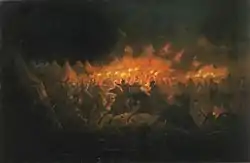 The Battle With Torches by Romanian painter Theodor Aman. |
The Night Attack at Târgoviște (Romanian: Atacul de noapte de la Târgoviște) was a battle fought between forces of prince Vlad III of Wallachia, and sultan Mehmed II of the Ottoman Empire on Thursday, 17 June 1462. The battle started after Mehmed, who already had tense relations with Vlad, discovered his alliance with Hungary's king Matthias Corvinus and ordered his forces to ambush him. Vlad foiled the attack and invaded Bulgaria. In response, Mehmed raised a great army with the objective to conquer Wallachia and annex it to his empire. The two leaders fought a series of skirmishes, the most notable one being the conflict where Vlad attacked the Turkish camp in the night in an attempt to kill Mehmed. The assassination attempt failed and Mehmed marched to the Wallachian capital of Târgoviște, where he found a few men with cannons. After leaving the capital, Mehmed discovered 23,844 impaled Turks whom Vlad had killed during his invasion of Bulgaria. The number is mentioned by Vlad himself in a letter to Matthias Corvinus. The sultan and his troops then sailed to Brăila and burned it to the ground before retreating to Adrianople. Both sides claimed victory in the campaign and Mehmed's forces returned home with many captured slaves, horses, and cattle. (Full article...)
In the 1280s, Simon of Kéza was the first to claim that noblemen held authority in the kingdom. The counties developed into institutions of noble autonomy, and the nobles' delegates attended the Diets (parliaments). The wealthiest barons built stone castles allowing them to control vast territories, but royal authority was restored in the early 14th century. In 1351, King Louis I introduced an entail system and enacted the principle of "one and the selfsame liberty" of all noblemen, but legal distinctions between true noblemen and conditional nobles prevailed. The most powerful nobles employed lesser noblemen as their familiares (retainers) but this private link did not sever the familiaris' direct subjection to the monarch. According to customary law, only males inherited noble estates, but under the Hungarian royal prerogative of prefection the kings could promote "a daughter to a son", allowing her to inherit her father's lands. Noblewomen who had married a commoner could also claim their inheritance – the daughters' quarter (that is one-quarter of their father's possessions) – in land. (Full article...)
As of December 2011, the record has sold 500,000 copies worldwide, with incomes amounting to €8 million from sales and accompanying concert tours. Commercially, it experienced success in Europe, peaking within the top 20 in multiple countries. Hot was also awarded Gold and Platinum certifications in Romania and France, respectively. It was aided by the release of five singles, "Hot" (2008), "Love" (2009), "Déjà Vu" (2009), "Amazing" (2009) and "10 Minutes" (2010), which achieved success on record charts. "Hot" and "Amazing" were both number ones in Romania. Inna performed over 200 concerts to promote the album. (Full article...)
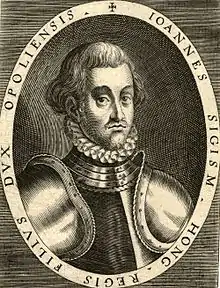
John Sigismund Zápolya or Szapolyai (Hungarian: Szapolyai János Zsigmond; 7 July 1540 – 14 March 1571) was King of Hungary as John II from 1540 to 1551 and from 1556 to 1570, and the first Prince of Transylvania, from 1570 to his death. He was the only son of John I, King of Hungary, and Isabella of Poland. John I ruled parts of the Kingdom of Hungary with the support of the Ottoman Sultan Suleiman; the remaining areas were ruled by Ferdinand I of Habsburg, who also ruled Austria and Bohemia. The two kings concluded a peace treaty in 1538 acknowledging Ferdinand's right to reunite Hungary after John I's death, though shortly after John Sigismund's birth, and on his deathbed, John I bequeathed his realm to his son. The late king's staunchest supporters elected the infant John Sigismund king, but he was not crowned with the Holy Crown of Hungary.
Suleiman invaded Hungary under the pretext of protecting John Sigismund from Ferdinand. Buda, the capital of Hungary, fell to the Ottomans without opposition in 1541, but Suleiman allowed the dowager queen, Isabella, to retain the territory east of the river Tisza on John Sigismund's behalf. Isabella and John Sigismund moved to Lippa (now Lipova in Romania). Before long, they took up residence in Gyulafehérvár in Transylvania (Alba Iulia in Romania). John Sigismund's realm was administered by his father's treasurer, George Martinuzzi, who sought to reunite Hungary under the rule of Ferdinand. Martinuzzi forced Isabella to renounce her son's realm in exchange for two Silesian duchies and 140,000 florins in 1551. John Sigismund and his mother settled in Poland, but she continued to negotiate for John Sigismund's restoration with Ferdinand's enemies. (Full article...)
An accompanying music video was shot by Edward Aninaru at MediaPro Studios in Buftea, Romania in January 2012. It was uploaded onto Inna's official YouTube channel on 5 April 2012 and references multiple fairy tales and animated movies, including The Wizard of Oz and Alice in Wonderland (1951). Music critics applauded the visual, praising its contemporary production. The song was nominated for Best Dance at the 2012 Romanian Music Awards. Commercially, "Wow" reached number 10 in Romania and position 171 in the Commonwealth of Independent States. (Full article...)
A music critic from CelebMix gave a positive review of the song, praising the lyrics, production and Stan's vocal delivery. Commercially, "Miami" experienced moderate success on record charts, reaching the top ten on the Romanian Airplay 100, in Bulgaria, and on Billboard's Dance Club Songs component chart, as well as number 44 on the Hot Dance/Electronic Songs ranking also compiled by the same publication. It was aided by a music video released onto Roton's official YouTube channel on 16 March 2018. Shot by Bogdan Păun in the United States, it shows two male and female characters dancing and interacting with a masked man. "Miami" was used as the anthem for the 2018 Neversea Festival. (Full article...)
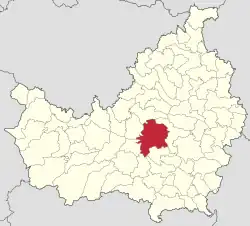 Location in Cluj County |
Cluj-Napoca (Romanian: [ˈkluʒ naˈpoka] (
 listen)), or simply Cluj (Hungarian: Kolozsvár [ˈkoloʒvaːr] (listen), German: Klausenburg), is the second-most populous city in Romania. It is the seat of Cluj County in the northwestern part of the country. Geographically, it is roughly equidistant from Bucharest (445 kilometres (277 miles)), Budapest (461 km (286 mi)) and Belgrade (483 km (300 mi)). Located in the Someșul Mic river valley, the city is considered the unofficial capital of the historical province of Transylvania. For some decades prior to the Austro-Hungarian Compromise of 1867, it was the official capital of the Grand Principality of Transylvania.
, 324,576 inhabitants lived within the city limits (making it the country's second most populous at the time, after the national capital Bucharest), marking a slight increase from the figure recorded at the 2002 census. The Cluj-Napoca metropolitan area has a population of 411,379 people, while the population of the peri-urban area (Romanian: zona periurbană) exceeds 420,000 residents. The new metropolitan government of Cluj-Napoca became operational in December 2008. According to a 2007 estimate provided by the County Population Register Service, the city hosts a visible population of students and other non-residents—an average of over 20,000 people each year during 2004–2007. The city spreads out from St. Michael's Church in Unirii Square, built in the 14th century and named after the Archangel Michael, Cluj's patron saint. The boundaries of the municipality contain an area of 179.52 square kilometres (69.31 sq mi). (Full article...)
The track represented Romania in the Eurovision Song Contest 1994 (held in Dublin, Ireland) after winning the pre-selection show Selecția Națională. In Dublin, Romania made its debut in the contest and finished in 21st place with 14 points. This remained Romania's worst result until their 1998 participation. One year after the event, "Dincolo de nori" was awarded Song of the Year by Romanian magazine Actualitatea muzicală. The song was re-recorded in 1998 by Bittman and his group Holograf for their 12th studio album Supersonic. (Full article...)
Commercially, the song topped the charts in the Commonwealth of Independent States (CIS) and Slovakia, and reached the top five in Bulgaria and the Czech Republic. A music video directed by Marius Moga and Giuliano Bekor was released to promote the song, which premiered on Romanian radio station Radio 21's website and was aired on MTV in late September 2009. The song was nominated at the 2010 Balkan Music Awards and at the 2010 Radio România Actualităţi Awards for Best Song from Romania and Best Pop/Dance Song, respectively. The video also received a nomination in the former ceremony for Best Video in the Balkans 2009. (Full article...)
Upon its release, "Sin Ti" was met with positive reviews from music critics. They praised the song's lyrics and instrumentation, as well as Inna's vocal delivery, while one likened it to her track "Ra" (2018), which set off her change in direction. An accompanying music video for "Sin Ti" was uploaded to Inna's YouTube channel simultaneously with the single's digital release. Directed by Bogdan Păun, the visual features the singer barefoot on a chair in a field. "Sin Ti" was used in Elite. (Full article...)
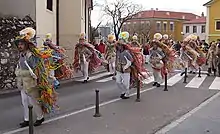 |
The Istro-Romanians (Istro Romanian: rumeri or rumâri) are a Romance ethnic group native to or associated with the Istrian Peninsula. Historically, they inhabited vast parts of it, as well as the western side of the island of Krk until 1875. However, due to several factors such as the industrialization and modernization of Istria during the socialist regime of Yugoslavia, many Istro-Romanians emigrated to other places, be them Croatian cities such as Pula and Rijeka or places such as New York City, Trieste and Western Australia. The Istro-Romanians dwindled severely in number, being reduced to eight settlements on the Croatian side of Istria in which they do not represent the majority.
It is known that the Istro-Romanians are actually not indigenous to Istria, since the differences between the Istro-Romanian language and the now extinct geographically close Dalmatian are notable. In addition, they count several similarities with the Transylvanian Romanians and Timok Vlachs, suggesting that the Istro-Romanians originate from the current areas west of Romania or Serbia. Although it is not known exactly how and when, the Istro-Romanians settled in Istria, where they would remain for centuries until they began to assimilate. Even now, with several associations and projects that aim to preserve their culture and with the support of both Croatian and Romanian governments, the Istro-Romanians are not officially recognized as a national minority. (Full article...)
Musically, the track is a ballad that discusses emotions such as sadness, despair, hope and nostalgia, as well as finding inner peace. It has a minimalistic and Billie Eilish-inspired production. "Alcohol You" was generally well received by music critics upon release, receiving praise for its lyrics and Roxen's vocal delivery. To promote the song, a lyric video was uploaded to YouTube simultaneously with the track's digital availability. Directed by Bogdan Păun, Roxen is shown in front of a neon sketch of herself alongside light and smoke effects. Additionally, the singer performed "Alcohol You" on the native talk show La Măruță and radio station Virgin in February and March 2020, respectively. (Full article...)
Selected article -
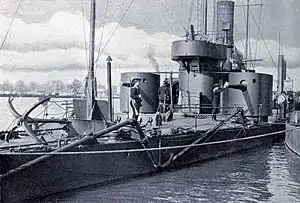 SMS Bodrog on the Danube river in 1914 |
The Yugoslav monitor Sava is a Temes-class river monitor that was built for the Austro-Hungarian Navy as SMS Bodrog. She fired the first shots of World War I just after 01:00 on 29 July 1914, when she and two other monitors shelled Serbian defences near Belgrade. She was part of the Danube Flotilla, and fought the Serbian and Romanian armies from Belgrade to the mouth of the Danube. In the closing stages of the war, she was the last monitor to withdraw towards Budapest, but was captured by the Serbs when she grounded on a sandbank downstream from Belgrade. After the war, she was transferred to the newly created Kingdom of Serbs, Croats and Slovenes (later Yugoslavia), and renamed Sava. She remained in service throughout the interwar period, although budget restrictions meant she was not always in full commission.
During the German-led Axis invasion of Yugoslavia in April 1941, Sava served with the 1st Monitor Division. Along with her fellow monitor Vardar, she laid mines in the Danube near the Romanian border during the first few days of the invasion. The two monitors fought off several attacks by the Luftwaffe, but were forced to withdraw to Belgrade. Due to high river levels and low bridges, navigation was difficult, and Sava was scuttled on 11 April. Some of her crew tried to escape cross-country towards the southern Adriatic coast, but all were captured prior to the Yugoslav surrender. The vessel was later raised by the navy of the Axis puppet state known as the Independent State of Croatia and continued to serve as Sava until the night of 8 September 1944 when she was again scuttled. (Full article...)Selected biography -
_(41296108950)_(cropped).jpg.webp) Kövesi in 2018 |
Laura Codruța Kövesi (née Lascu; Romanian pronunciation: [ˈla.ura koˈdrut͡sa ˈkøveʃi]; born 15 May 1973) is the first European Chief Prosecutor and the former chief prosecutor of Romania's National Anticorruption Directorate (Romanian: Direcția Națională Anticorupție - DNA), a position she held from 2013 until she was fired on the order of Justice Minister Tudorel Toader on 9 July 2018. Prior to this, between 2006 and 2012 Kövesi was the Prosecutor General of Romania (Romanian: Procuror General), attached to the High Court of Cassation and Justice.
Upon appointment in 2006, Kövesi was the first woman and the youngest Prosecutor General in Romania's history. She is also the only public servant to have held the office of Prosecutor General for the entire duration of its term. (Full article...)Related portals
Selected picture
Did you know (auto generated)

- ... that Gogu Rădulescu, a member of the Romanian Communist Party central committee, was allegedly spied on by his colleagues through Lăutari performers, called upon to "sing him the blues"?
- ... that Rebecca Blake, Anglo-Romanian captain of the Romania women's national cricket team, also led the French team to victory in a six-team tournament?
- ... that N. Porsenna, who translated The Ballad of Reading Gaol into Romanian, spent seven years in communist prisons?
- ... that Bessarabian legislator Anton Novakov, who was absent when his colleagues voted on union with Romania, sued the Romanian state for land benefits they had received for voting in favor?
- ... that, while drunk, Romanian government minister Gheorghe Chițu allegedly had a dentist "pull out the roots of all his molars and his front teeth", resulting in permanent neurological damage?
- ... that the Romanian soprano Iulia Maria Dan was Hamlet's Ophelia in the Bregenz Festival's revival of Franco Faccio's revived opera Amleto?
More did you know
- ...that Romania joined the EU on 1 January 2007?
General images
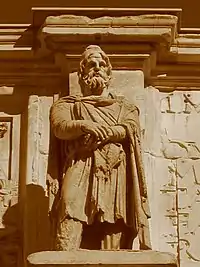 Tarabostes on the Arch of Constantine (from History of Romania)
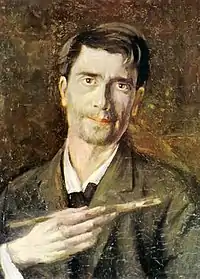 Ștefan Luchian (from Culture of Romania)
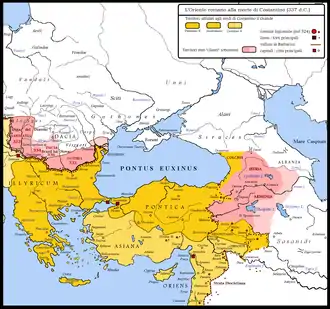 Dacia during Constantine the Great (from History of Romania)
 Tochitură (from Culture of Romania)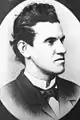
.jpg.webp)
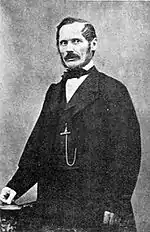 George Barițiu (from Culture of Romania)
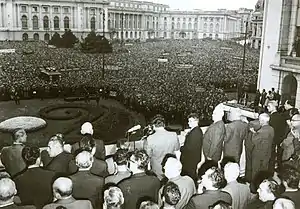 Nicolae Ceauşescu condemning the Warsaw Pact invasion of Czechoslovakia in 1968 (from History of Romania)
 Clătite with jam (from Culture of Romania)
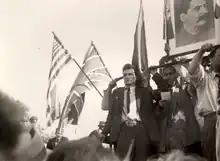 Nicolae Ceaușescu and others welcome the Red Army as it enters Bucharest on 30 August 1944. (from History of Romania)
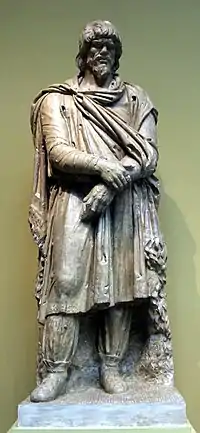 Dacian cast in Pushkin Museum, after original in Lateran Museum. Early second century AD. (from History of Romania)
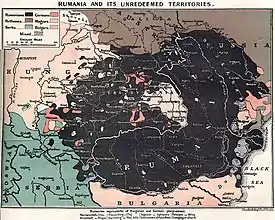 Territories inhabited by Romanians before WWI (from History of Romania)
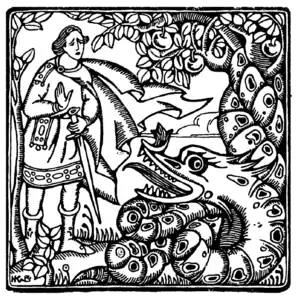 Engraving of a fairy tale scene, featuring Prince Charming (Făt-Frumos) and a dragon (zmeu). (from Culture of Romania)
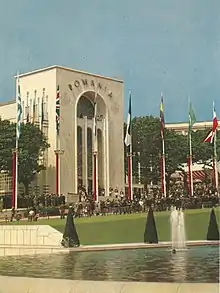 Romanian pavilion at EXPO Paris 1937 (from History of Romania)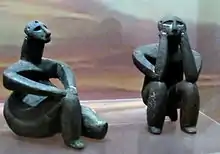
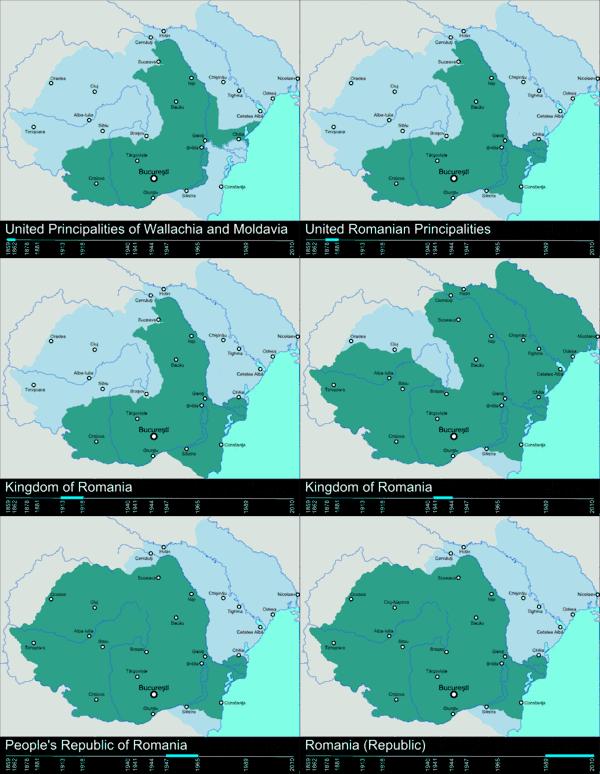 Timeline of the borders of Romania between 1859 and 2010 (from History of Romania)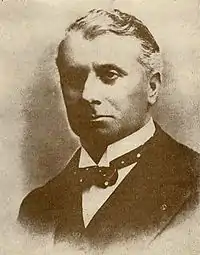
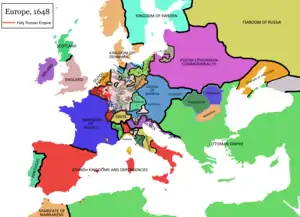 Map of Europe in 1648 showing Transylvania and the two Romanian principalities: Wallachia and Moldavia (from History of Romania)
 Papanași (from Culture of Romania)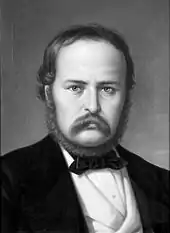
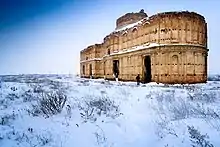 Winter picture of Chiajna Monastery. The monastery is situated on the outskirts of Bucharest (from Culture of Romania)
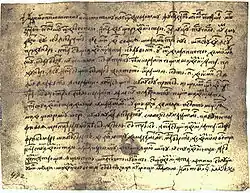 Neacșu's letter is the oldest surviving document written in Romanian. (from Culture of Romania)
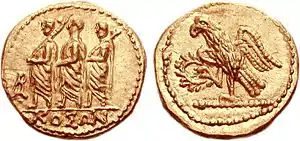 Geto-Dacian Koson, mid 1st century BC (from History of Romania)
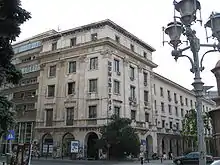 Humanitas headquarters in Bucharest (from Culture of Romania)
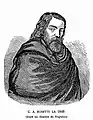 C.A. Rosetti (from Culture of Romania)
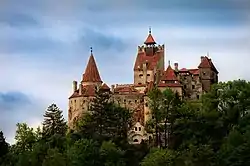 Bran Castle (German: Törzburg, Hungarian: Törcsvár) built in 1212, is commonly known as Dracula's Castle and is situated in the centre of present-day Romania. In addition to its unique architecture, the castle is famous because of persistent myths that it was once the home of Vlad III Dracula. (from History of Romania)
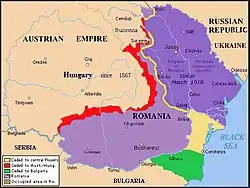 Romanian territorial losses in the Treaty of Bucharest in May 1918 (from History of Romania)
.svg.png.webp)
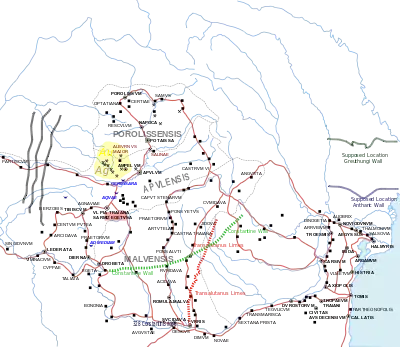 Roman walls in Dacia (from History of Romania)
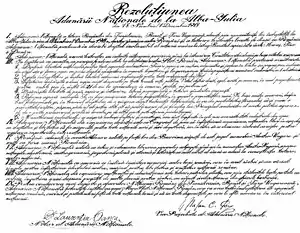 Proclamation of Union between Transylvania and Romania (from History of Romania)
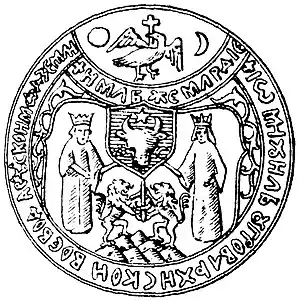 Seal of Michael the Brave during the personal union of the two Romanian principalities with Transylvania (from History of Romania)
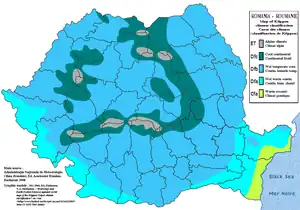 Romania map of Köppen climate classification, according with Clima României from the Administrația Națională de Meteorologie, Bucharest 2008 (from Geography of Romania)
 Sibiu (German: Hermannstadt), the 2007 European Capital of Culture (from Culture of Romania)
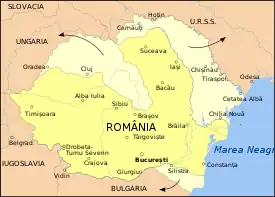 Romania after the territorial losses of 1940. The recovery of Bessarabia and Northern Bukovina was the catalyst for Romania's entry into the war on Germany's side. (from History of Romania)
.jpg.webp)
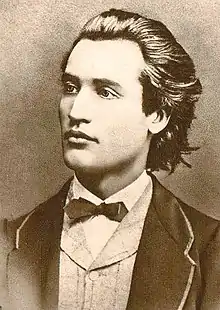 Mihai Eminescu, national poet of Romania and Moldova (from Culture of Romania)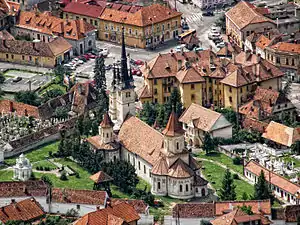
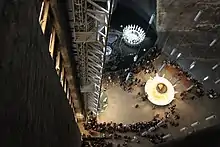
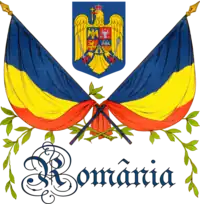 Illustration featuring the Romanian coat of arms and tricolor (from Culture of Romania)
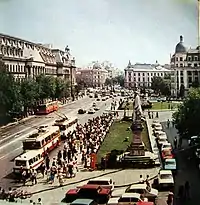 University Square in Bucharest during Communism (from Culture of Romania)
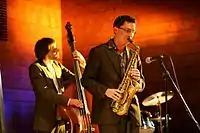 EUROPAfest Jazz festival in Bucharest (2010) (from Culture of Romania)
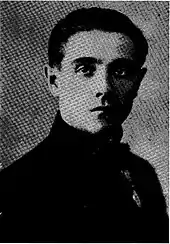 Lieutenant Emil Rebreanu was awarded the Medal for Bravery in gold, the highest military award given by the Austrian command to an ethnic Romanian; he would later be hanged for desertion while trying to escape to Romania. Was the inspiration for his brother's famous novel "The Forest of the Hanged". (from History of Romania)
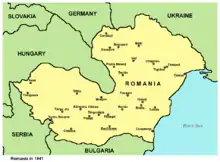 Romania annexed Transnistria, the area between the Dniester and Southern Bug, in July 1941. (from History of Romania)
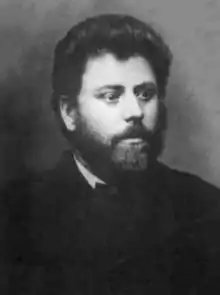 Ion Creangă (from Culture of Romania)
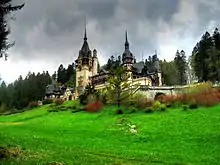 Peleş Castle, retreat of Romanian monarchs (from History of Romania)
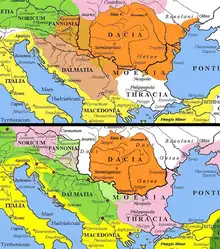 Top: territories controlled by the Dacian king, c. 50 BC; bottom: territories controlled by the Dacian king, circa year zero (from History of Romania)
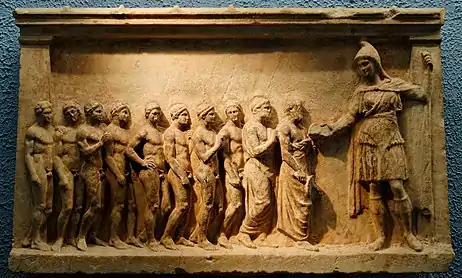 Votive stele representing Bendis wearing a Dacian cap (British Museum) (from History of Romania)
 Baked pumpkin with powdered sugar and cinnamon (from Culture of Romania)
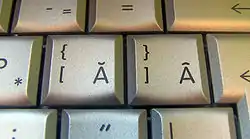 Romanian keyboard with special characters (from Culture of Romania)
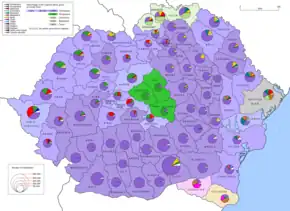 Ethnic map of Greater Romania according to the 1930 census. Sizeable ethnic minorities put Romania at odds with Hungary, Bulgaria, and the Soviet Union throughout the interwar period. (from History of Romania)
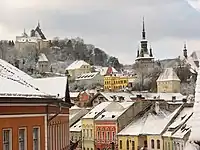 The medieval and picturesque Transylvanian Saxon town of Sighișoara (German: Schäßburg) (from Culture of Romania)
.JPG.webp)
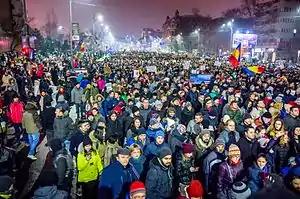 Romania has seen its largest waves of protests against judicial reform ordinances of the PSD-ALDE coalition during the 2017–2019 Romanian protests. (from History of Romania)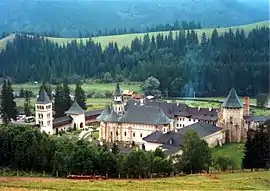
.jpg.webp) Mustard soup with croutons (from Culture of Romania)
Mustard soup with croutons (from Culture of Romania).svg.png.webp) 1941 stamp depicting a Romanian and a German soldier in reference to the two countries' common participation in Operation Barbarossa. The text below reads the holy war against Bolshevism. (from History of Romania)
1941 stamp depicting a Romanian and a German soldier in reference to the two countries' common participation in Operation Barbarossa. The text below reads the holy war against Bolshevism. (from History of Romania)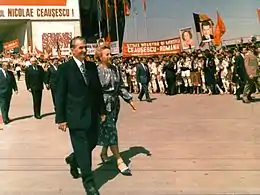 The Communist government fostered the personality cult of Nicolae Ceaușescu and his wife Elena, 1986. (from History of Romania)
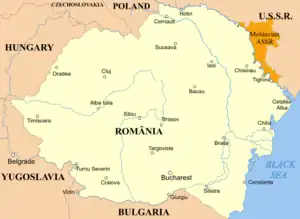 Great Romania (1920–1940) (from History of Romania)
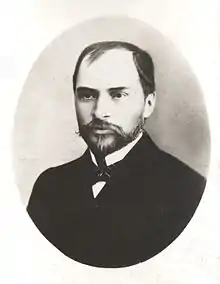 George Coșbuc (from Culture of Romania)
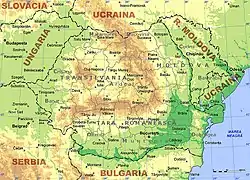 Physical and administrative map of Romania, with the historic regions in grey (Țara Românească means Wallachia). (from Geography of Romania)
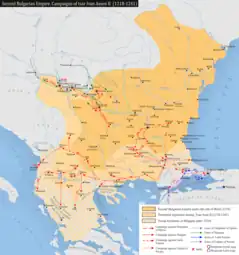 Second Bulgarian Empire (from History of Romania)
 Victory Avenue in Bucharest, 1940 (from Culture of Romania)
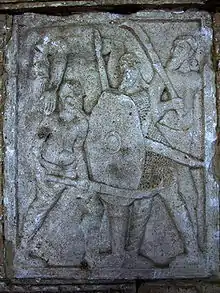 Roman monument commemorating the Battle of Adamclisi clearly shows two giant Dacian warriors wielding a two-handed falx (from History of Romania)
 Baked potatoes with steak and cucumber salad (from Culture of Romania)
 A 19th century depiction of Dacian women (from History of Romania)
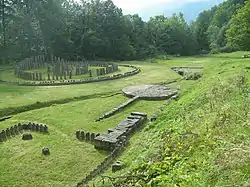 The sanctuaries in the ruined Sarmizegetusa Regia, the capital of ancient Dacia (from History of Romania)
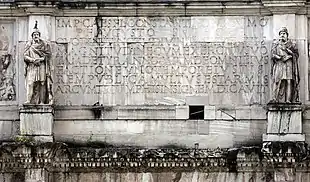 Two of the eight marble statues of Dacian warriors surmounting the Arch of Constantine in Rome (from History of Romania)
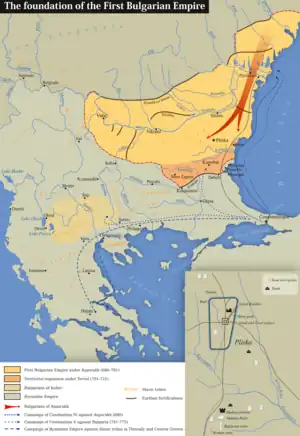 The foundation of the First Bulgarian Empire (from History of Romania)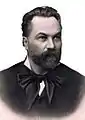

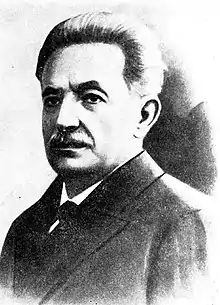 Ioan Slavici (from Culture of Romania)
.jpg.webp) The sanctuaries of the ancient Dacian Kingdom capital, Sarmizegetusa Regia (from History of Romania)
The sanctuaries of the ancient Dacian Kingdom capital, Sarmizegetusa Regia (from History of Romania)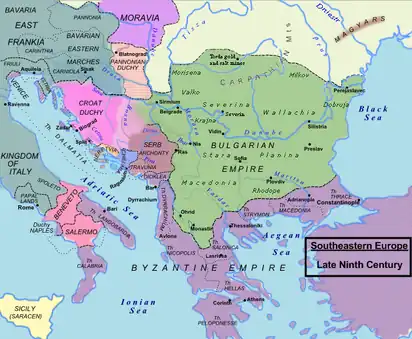 First Bulgarian Empire (from History of Romania)
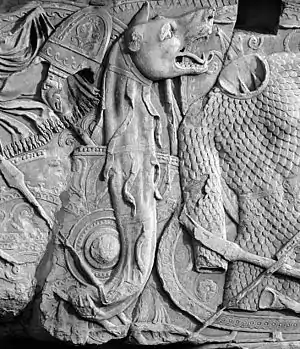 Dacian Draco as from Trajan's Column (from History of Romania)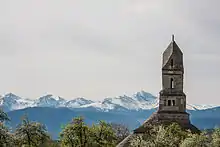
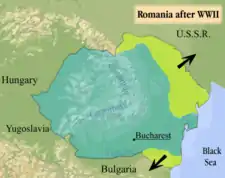 Map of Romania after World War II indicating lost territories (from History of Romania)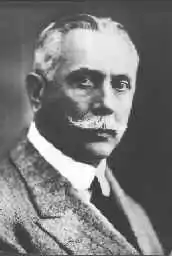
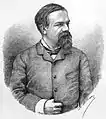 Titu Maiorescu (from Culture of Romania)
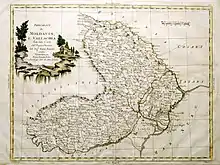 The Principalities of Moldavia and Wallachia in 1786, Italian map by G. Pittori, since the geographer Giovanni Antonio Rizzi Zannoni (from History of Romania)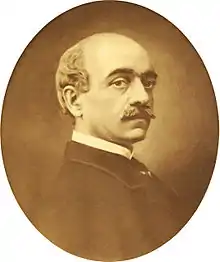
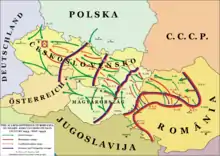 Romanian operations against the Axis (from History of Romania)
Topics

| Europe |
|  | ||||
|---|---|---|---|---|---|---|
| Americas | ||||||
| Asia and Oceania | ||||||
| See also |
| |||||
| Subdialects |
| ||
|---|---|---|---|
| Dialects/related languages |
| ||
| Linguistics | |||
| Periods of historic evolution | |||
| Written form | |||
| Institutions and movements | |||
| Language contact | |||
| Speech communities | |||
| Others | |||
| |||

| ||
| Appetizers & salads | |
|---|---|
| Beverages | |
| Breads | |
| Cheeses | |
| Condiments & sauces | |
| Delicatessen |
|
| Desserts |
|
| Dishes |
|
| Grilled meats | |
| Soups |
|

Recognized content




_in_flight_Danube_delta_2.jpg.webp)

_with_bee_prey_Babadag.jpg.webp)
_R%C3%A1k%C3%B3czi_(1593-1648)_-_Rembrandt_van_Rijn_%2526_Jan_Gillisz._van_Vliet.jpg.webp)

%252C_figurino_di_Adolf_Hohenstein_per_La_Wally_(1892)_-_Archivio_Storico_Ricordi_ICON004639_-_Restoration.jpg.webp)

New articles
- For a listing of new articles, see Portal:Romania/New articles.
Categories

Recent events in Romania
Wikiproject
| WikiProject Romania | |
|---|---|
| Project pages |
|
| Departments |
|
| Announcements |
|
Things you can do

Requested articles: Theater in Romania/Theatre in Romania, Virgil Gheorghiu (poet), Ion Brad
Translation from Romanian: ro:Adrian Sobaru - Adrian Sobaru, ro:Lacul Avrig - Avrig Lake, ro:Letea, Tulcea - Letea, Tulcea
Expand: Bârlad, Romanian lexis, Mihai Leu, Lia Manoliu, Theodor Aman, CFR Cluj, High Court of Cassation and Justice, Health Care in Romania, Development regions of Romania
Cleanup: Cinema of Romania, Culture of Romania, Northern Transylvania
- You can locate significant places in Bucharest using a special map here, which has a unique 3D view.
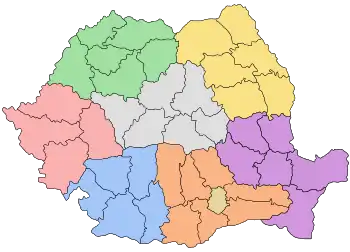
Administrative divisions
| |||||||||||||||||||||||||||||
Associated Wikimedia
The following Wikimedia Foundation sister projects provide more on this subject:
-
 Commons
Free media repository -
 Wikibooks
Free textbooks and manuals -
 Wikidata
Free knowledge base -
 Wikinews
Free-content news -
 Wikiquote
Collection of quotations -
 Wikisource
Free-content library -
 Wikiversity
Free learning tools -
 Wikivoyage
Free travel guide -
 Wiktionary
Dictionary and thesaurus
-
 List of all portalsList of all portals
 -
 The arts portal
 -
 Biography portal
 -
 Current events portal
 -
 Geography portal
 -
 History portal
 -
 Mathematics portal
 -
 Science portal
 -
 Society portal
 -
 Technology portal
 -
 Random portalRandom portal
 -
 WikiProject PortalsWikiProject Portals