4-Deoxypyridoxine
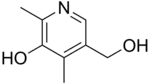
4-Deoxypyridoxine is a vitamin B6 antagonist.[1] It may be toxic to developing embryos since it can have negative effects on collagen and elastin during development.[2] The presence of this compound can produce vitamin B6 deficiency, which suppresses the immune system.[3] 4-Deoxypyridoxine lowers vitamin B6 concentration by competitively inhibiting some of the enzymes necessary for the regeneration of vitamin B6.[4]The related immunosuppression can be beneficial in animal models of Trichinella spiralis infections.[5] 4-Deoxypyridoxine has also been described as an inhibitor of sphingosine-1-phosphate lyase.[6] The inhibition of sphingosine-1-phosphate lyase by 4-Deoxypyridoxine has been shown to prevent cell death of ex-vivo animal pancreatic islets. The use of 4-Deoxypyridoxine to prevent stress-induced apoptosis is suggest that the compound, as well as other inhibitors of sphingosine-1-phosphate lyase, could be used to increase the viability of donor pancreatic tissue in the treatment of diabetes.[7]
 | |
| Names | |
|---|---|
| Preferred IUPAC name
5-(Hydroxymethyl)-2,4-dimethylpyridin-3-ol | |
| Identifiers | |
3D model (JSmol) |
|
| ChemSpider | |
PubChem CID |
|
| UNII | |
CompTox Dashboard (EPA) |
|
| |
| |
| Properties | |
| C8H11NO2 | |
| Molar mass | 153.181 g·mol−1 |
Except where otherwise noted, data are given for materials in their standard state (at 25 °C [77 °F], 100 kPa).
Infobox references | |


References
- Coburn SP, Mahuren JD, Schaltenbrand WE, Wostmann BS, Madsen D (1 February 1981). "Effects of vitamin B-6 deficiency and 4'- deoxypyridoxine on pyridoxal phosphate concentrations, pyridoxine kinase and other aspects of metabolism in the rat". J. Nutr. 111 (2): 391–8. doi:10.1093/jn/111.2.391. PMID 6257871.
- Bird TA, Levene CI (1983). "The effect of a vitamin B-6 antagonist, 4-deoxypyridoxine, on the cross-linking of collagen in the developing chick embryo". Biochem. J. 210 (3): 633–8. doi:10.1042/bj2100633. PMC 1154271. PMID 6135414.
- Trakatellis A, Dimitriadou A, Exindari M, et al. (1992). "Effect of pyridoxine deficiency on immunological phenomena". Postgrad Med J. 68 Suppl 1: S70–7. PMID 1409221.
- Vu HN, Downs DM. Genetic analysis using vitamin B6 antagonist 4-deoxypyridoxine uncovers a connection between pyridoxal 5'-phosphate and coenzyme A metabolism in Salmonella enterica. J Bacteriol. 2022 Mar 24;204(3):e00607-21. doi: 10.1128/JB.00607-21. PubMed PMID: 34213717.
- Frydas S, Papaioanou N, Vlemmas I, et al. (1999). "Vitamin B6-deficient diet plus 4-deoxypyridoxine (4-DPD) reduces the inflammatory response induced by T. spiralis in diaphragm, masseter and heart muscle tissue of mice". Mol. Cell. Biochem. 197 (1–2): 79–85. doi:10.1023/A:1006958310081. PMID 10485327. S2CID 23457740.
- Weigel, Cynthia; Hüttner, Sören S.; Ludwig, Kristin; Krieg, Nadine; Hofmann, Susann; Schröder, Nathalie H.; Robbe, Linda; Kluge, Stefan; Nierhaus, Axel; Winkler, Martin S.; Rubio, Ignacio (2020-08-01). "S1P lyase inhibition protects against sepsis by promoting disease tolerance via the S1P/S1PR3 axis". EBioMedicine. 58: 102898. doi:10.1016/j.ebiom.2020.102898. ISSN 2352-3964. PMC 7381498. PMID 32711251.
- Lee H, Jeong J, Ji E, et al. 4-Deoxypyridoxine improves the viability of isolated pancreatic islets ex vivo. Islets. 2013;5(3):116-121. doi:10.4161/isl.25254.
