1922 Auckland Rugby League season
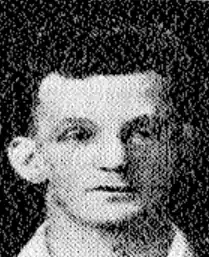
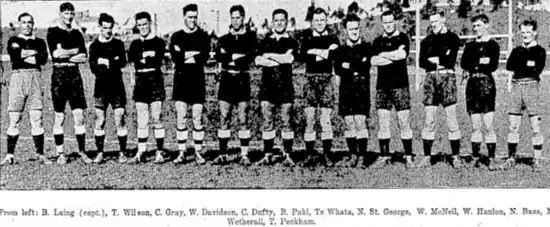
The 1922 Auckland Rugby League was the 14th in its history. There were 68 teams playing across the various grades. City Rovers won the first grade championship for the 5th time, with Ponsonby winning the Roope Rooster for the 2nd time. City Rovers also defended the Challenge Shield, warding off efforts from Petone, Tongariro, and Huntly to lift it from them. Bill Davidson set a record for points scored in an Auckland club rugby league season with 116 for City Rovers. He and his brothers Ben and George between them scored 186 of City Rover's 339 points which was also a competition record for a team in a single season. City scored a further 19 points in the Roope Rooster competition and 85 points in their 3 Challenge Shield matches for 443 points in all official games.
It was an incredibly busy year for the Auckland representative team. They played more matches than some club teams had played in earlier seasons with ten matches in total. There was also an Auckland Provincial team match against New South Wales, and one Auckland B fixture with the team making the trip down to Cambridge to play the local side. Bill Davidson also led the representative team in scoring with 37 points.
Auckland rugby league news
Junior Management Committee
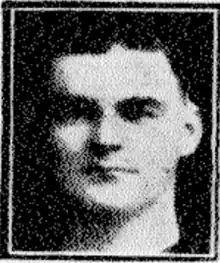
The junior management committee elected for the season was L. Binns, J.S. White, K. Lippiatt, G.J. Flynn, W. Baskett, William Mincham, O.O. Riley, D.C. Adamson, W.E. Frost, Bill Davidson (Hon. Sec), A. Freeman (Chairman), G.H. Seagar, A.H. Te Mete, T.B. Carpenter, W. Dowle, G.F. Burgess, J. Curtis, F. Cleal, W. Boag, F. Kennedy.
Carlaw Park
At a pre-season meeting of the management committee it was discussed that Carlaw Park needed more ‘modern equipment’, and it was decided that “the establishment of more modern methods of dealing with the turf and the purchase of more efficient machinery shall be an early charge on the new season's funds”.[1] Sufficient money was made from gates at club and rep fixtures at Carlaw Park and the Auckland Domain to begin improvements on the ground at the conclusion of the season.
New clubs and name changes
The Auckland Rugby League accepted a new club named Mangere. They entered a team in the 2nd Grade.
The Maritime club also changed their name to ‘Athletic’. Their club colours were also changed from red, white and blue to royal blue with a gold band. In 1926 they were to change their name again to Grafton Athletic. This was not to be confused with Grafton Athletic who had existed as a team from 1914–1920 under the leadership of Karl Ifwersen and were presently playing under the name of 'Fire Brigade'.
Richmond Rovers applied for entry into the Senior A Grade competition and this was approved. This made the competition an even 8 teams meaning 4 matches per round and no byes. Unlike most previous seasons there were no byes, no defaults, and no postponed matches meaning 56 matches were played in total, easily the most in the competitions history. Richmond would go on to finish 7th with 3 wins and 11 losses.
George Davidson's return
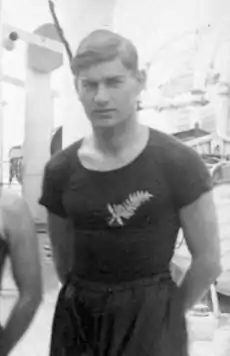
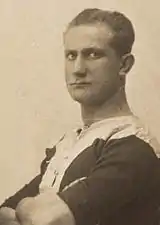
George Davidson played for Maritime (now named Athletic) in the 1919 season but had missed most of the 1920 and 1921 seasons as he was training for and competing at the Antwerp Olympics where he came 5th in the 200m final. He stated that over those two seasons he had only played for Maritime on two or three occasions as he was seeking a transfer to the City Rovers where his two brothers Bill and Ben played. Athletic were denying his request and Davidson appealed to the league who then asked the Athletics club to reconsider his request "favourably". He would eventually have his transfer to City approved.
Point Chevalier
Point Chevalier secured the use of Richard and Elizabeth Walker's paddock at the bottom of Humariri Street as their home ground. It has since become Walker Park where they are to this day located. In the same season they bought jerseys from George Court & Co. Ltd. In 1925 a shed was built at Walker Park with volunteer labour.
Monteith Shield (1st grade championship)
Monteith Shield standings
Monteith Shield fixturesRound 1Peter Irwin James Francis Hing, better known as James Hing, or later Sonny Hing scored a try for Ponsonby. He had previously played for Marist and would later coach the Point Chevalier premier side in the 1930s. He was the son of Charles A'Hing and Margaret Mary Irwin and was one of the first ever rugby league players in New Zealand with Chinese ancestry along with Arthur Singe.
Round 2In the match between Athletic and Ponsonby Eric Grey had a highly unusual collection of points after he scored a try, and kicked a conversion, a penalty, a goal from a mark, and a drop goal. Bert Laing transferred to Devonport during the week and had the unusual distinction of scoring against a team and then for a team in the space of a week.
Round 3
Round 4
Round 5
Round 6
Round 7
Round 8
Round 9
Round 10
Round 11
Round 12
Round 13
Round 14
Roope Rooster knockout competitionThe loss by Athletic in the final was remarkably their 5th consecutive loss in the Roope Rooster final (their previous 4 under the name or Maritime). Round 1
Semi finals
Final
Top try scorers and point scorersThese lists include tries and points scored in the First Grade competition and the Roope Rooster competition only. Bill Davidson set a record for the number of points scored by a single player in a season. While earlier seasons were often incomplete with some points unattributed his 116 points was well ahead of the previous highest of 78 by Karl Ifwersen in the 1915 season. P Gallagher of Marist was the top try scorer with 15.
Challenge shield matchesCity Rovers came into the season as holders of the trophy after defeating Ponsonby United the previous season. The shield had taken the place of the Thacker Shield which had been taken from Ponsonby and returned to the Canterbury Rugby League after a dispute over who was eligible to compete for it. City went on to defend the shield 3 times during the season defeating Petone, Tongariro, and Huntly. City v Petone
City v TongariroThe Tongariro team was “made up of Maori players drawn from the scattered settlements of the King Country” according to the New Zealand Herald match report, though were missing some of their best players. The Auckland Star reported that many of their players were graduates of Te Aute College.
City v HuntlyHuntly came to Auckland as the South Auckland (Waikato) champions and were expected to provide a stern test to City however after a competitive first half they fell away badly in the second half with City ending up running in 11 tries.
Lower grades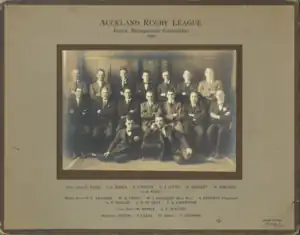 Second gradeCity Rovers defeated Devonport United 16–13 in the final on September 2. Marist and Ellerslie had withdrawn after 2 rounds, Newton withdrew after 8, Athletic after 9, and Otahuhu after 10. A knockout competition involving the nine teams still remaining from the championship, and Newton who had reformed their team began on September 9. On October 28 Mangere defeated Newton 19-11 in the final played at Manukau (Onehunga). On September 16 a Junior rep side made up of players from this grade played against the Wednesday Representative side and lost 16-8. The match was played as a curtain-raiser to the Auckland - New South Wales at Carlaw Park.
|
.jpg.webp)